


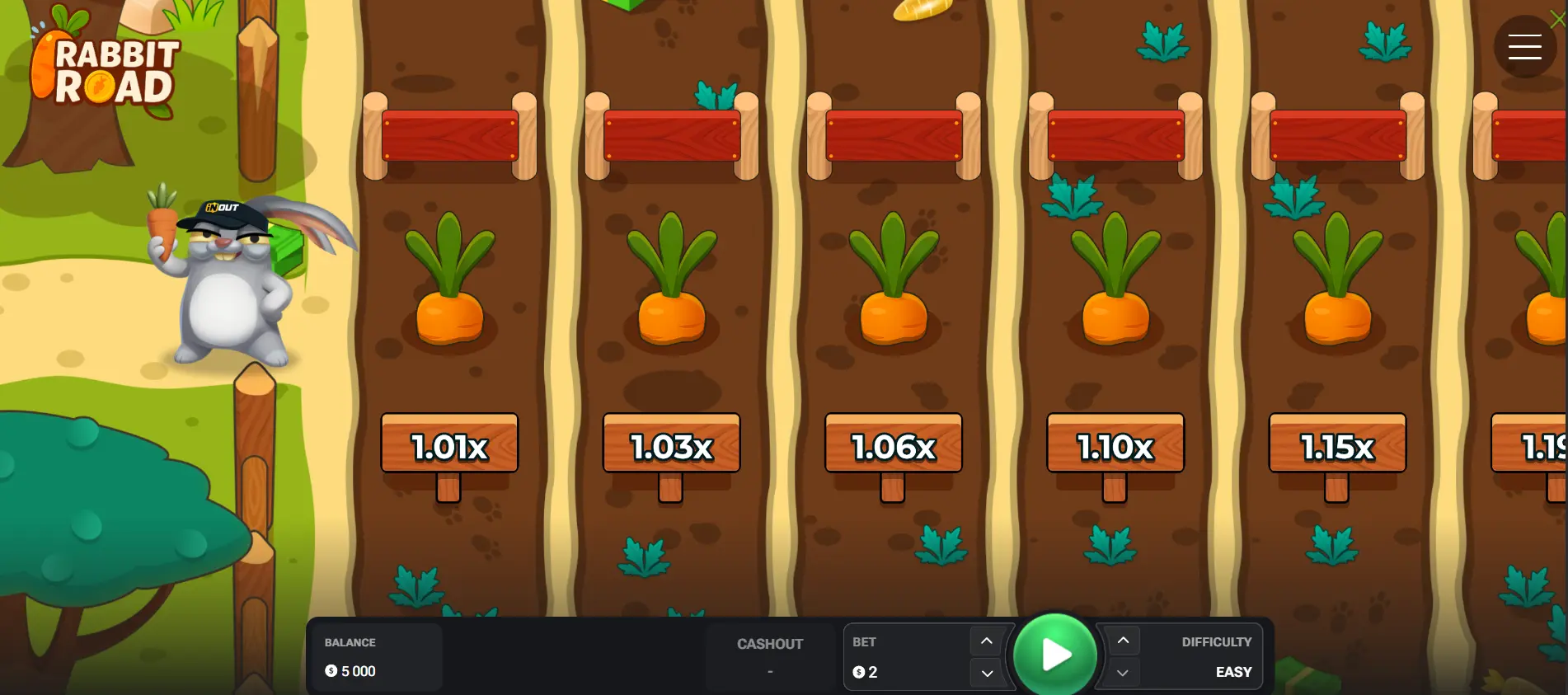
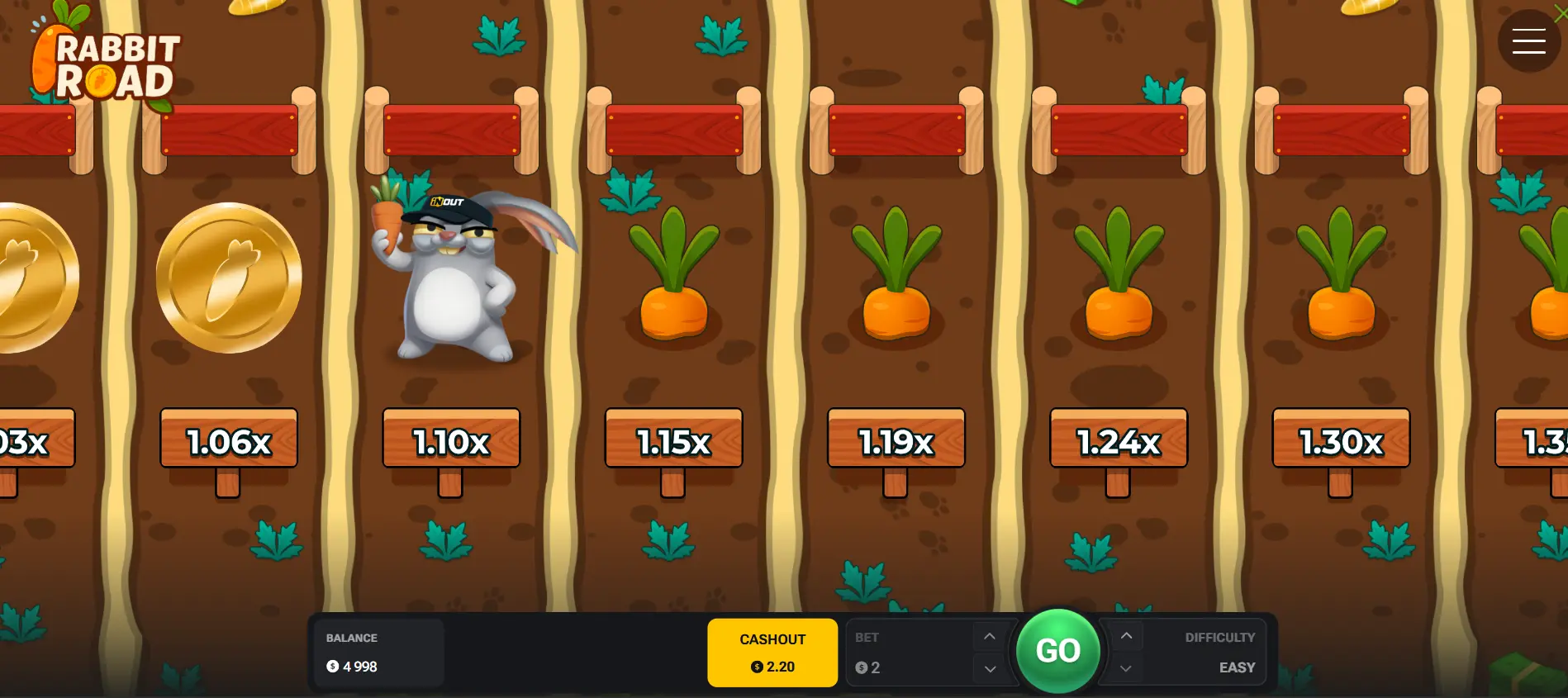

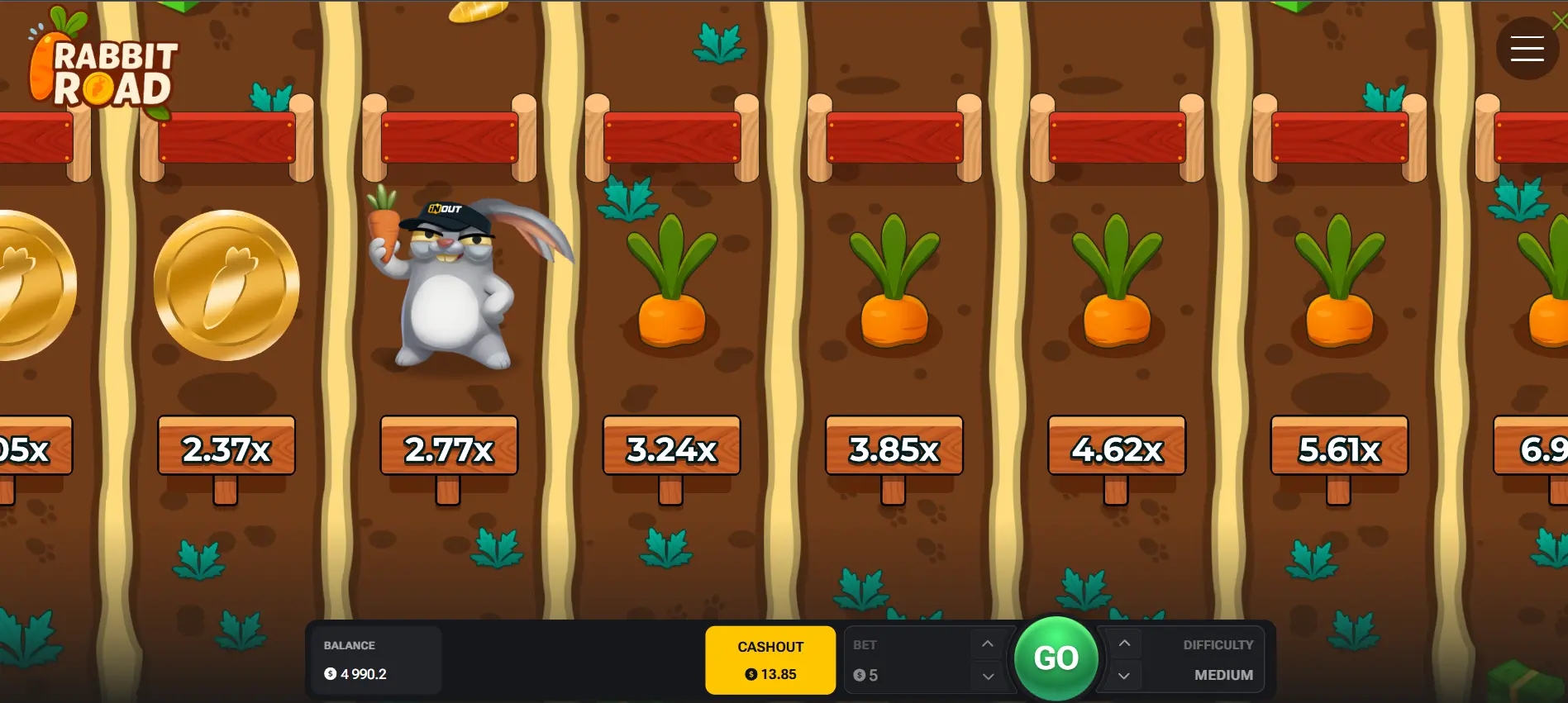
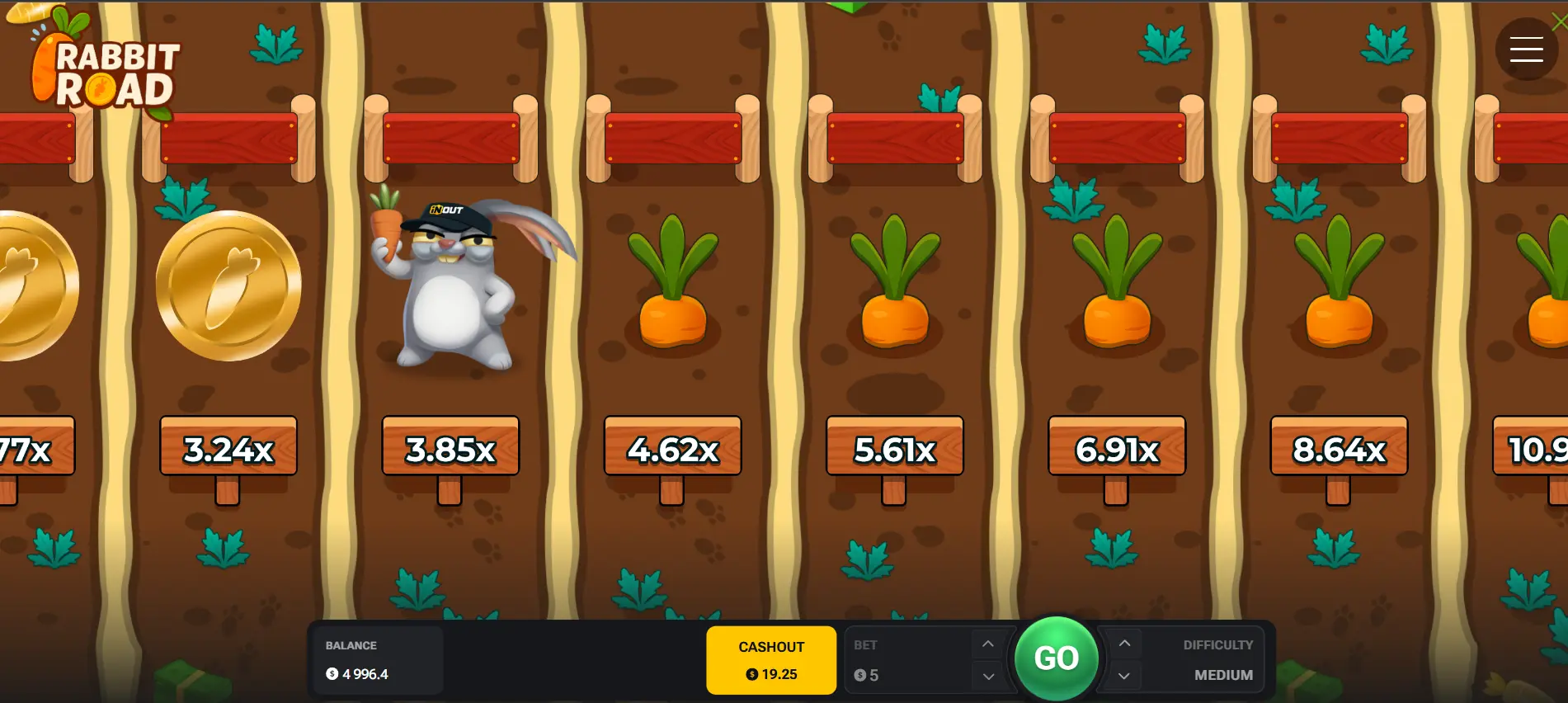
Rabbit Road 2 is not built around rapid-fire dopamine. It’s structured around calculated variance and bonus-weighted return distribution. The game doesn’t rush to impress — it unfolds.
The core math model prioritizes controlled volatility. That means longer base cycles, tighter symbol weighting, and payout concentration inside bonus mechanics. For players who understand variance, this isn’t instability — it’s strategic depth.
RTP Architecture and Return Distribution
At 96.45% RTP, Rabbit Road 2 positions itself slightly above the industry baseline. But the percentage alone doesn’t define the experience. What matters is where that return is allocated.
A significant share of theoretical return is embedded in bonus-triggered phases. That shifts the session dynamic from frequent small wins to concentrated payout spikes.
Volatility Profile and Risk Structure
Rabbit Road 2 operates in the high-volatility segment. That classification isn’t just a label — it defines how sessions behave.
Expect extended neutral stretches. Expect bonus triggers to matter. The volatility curve favors depth over short-term fluctuation.
Structural Evolution from the Previous Version
Compared to the original release, Rabbit Road 2 tightens bonus entry conditions while expanding potential ceiling. That combination increases session variance but strengthens long-term upside potential.
Multiplier interaction now compounds volatility instead of merely scaling wins. This subtle structural adjustment reshapes how payout momentum builds.
Payout Distribution Model
Rabbit Road 2 does not distribute value evenly across spins. The return curve is skewed toward high-impact bonus events, meaning that a relatively small percentage of spins account for a large share of theoretical payout.
This structure is typical of high-volatility math design. The base game maintains balance, while the bonus phase carries amplified equity movement.
Estimated Payout Distribution
Maximum Win Potential
The theoretical maximum win in Rabbit Road 2 reaches x5000 the stake. That figure alone doesn’t define expected outcome — but it defines ceiling capacity.
In high-volatility models, ceiling matters. It determines how much vertical movement the system can produce once bonus alignment occurs.

Comparative Positioning
When positioned against similar high-volatility slots, Rabbit Road 2 emphasizes ceiling expansion over hit frequency. It does not attempt to compete through constant micro payouts — it competes through amplitude.
| Game | RTP | Volatility | Max Win |
|---|---|---|---|
| Rabbit Road 2 | 96.45% | High | x5000 |
| Rabbit Road | 96.20% | Medium-High | x3000 |
| Fortune Rabbit | 96.50% | High | x5000 |
| Lucky Neko | 96.70% | Medium | x2500 |
Symbol Structure and Weighting Logic
Rabbit Road 2 uses a refined symbol hierarchy. The lower tier symbols maintain session rhythm, while premium symbols and multiplier interactions carry structural weight.
Unlike flat-pay models, symbol contribution here is uneven by design. Premium alignment during multiplier phases significantly alters payout amplitude.
Bonus Mechanics Flow
The bonus round in Rabbit Road 2 is not just an added feature — it is the central payout engine.
Entry frequency is reduced compared to the original version. However, once activated, multiplier interaction intensifies return concentration.
Risk vs Reward Balance
High-volatility systems trade hit frequency for amplitude. Rabbit Road 2 leans toward reward expansion once structural alignment occurs.
Session Strategy and Bankroll Structuring
Rabbit Road 2 is not optimized for short, high-frequency sessions. Its volatility model favors deeper runs where variance has room to unfold.
Short sessions may experience flat cycles. Longer sessions allow multiplier interaction and bonus alignment to express statistical potential.
From a structural standpoint:
- Low bet size + longer session depth increases variance exposure.
- Aggressive stake scaling increases amplitude but reduces sustainability.
- Bonus hunting requires capital discipline.
The key is not spin speed — it’s patience within the volatility curve.
Mobile Performance and UX Stability
Rabbit Road 2 is designed for vertical play and maintains strong performance in mobile environments. Load times are stable, transitions are clean, and animation weight does not overload mid-range devices.
In portrait mode, symbol visibility remains balanced without compression artifacts. This is especially relevant for players running extended sessions on mobile.
Below is a simplified mobile performance indicator.
Long-Term Variance Behavior
In high-volatility games, session outcome is less about immediate feedback and more about exposure time within the mathematical cycle.
Rabbit Road 2 is structured to:
- Reduce medium-tier win frequency
- Increase bonus-phase weight
- Expand theoretical payout ceiling
This creates a steeper equity curve. When bonus alignment occurs, payout spikes are proportionally larger compared to medium-volatility slots.
Rabbit Road 2 is structurally mature. It does not rely on cosmetic noise or inflated hit frequency. Instead, it commits to a volatility-driven payout model built around concentration and ceiling expansion.
For players who understand session depth and variance management, this design offers meaningful upside potential.
It is not optimized for short-term volatility avoidance. It is optimized for controlled amplitude.
From an analytical standpoint, Rabbit Road 2 delivers a well-balanced high-volatility framework with expanded payout architecture and stable mobile performance.
Who This Game Is For
Rabbit Road 2 is not designed for everyone. Its volatility profile, payout concentration, and session structure favor a specific type of player behavior.
Understanding whether the math model aligns with your play style is more important than focusing on headline metrics like RTP.
Ideal For
- Players comfortable with extended variance exposure
- Bonus hunters who understand payout concentration
- Bankroll planners who manage session depth
- High-volatility enthusiasts seeking ceiling potential
Not Ideal For
- Players expecting frequent medium wins
- Short-session gamblers
- Low-risk preference players
- Users prioritizing constant hit feedback
To visualize this behavioral alignment, here’s a structural player fit indicator.
Hit Frequency vs Perceived Volatility
One of the most common misconceptions in slot analysis is confusing hit frequency with volatility.
A “hit” simply means any winning combination — even if the payout is minimal. High-volatility games often maintain moderate hit frequency while concentrating meaningful value inside bonus phases.
Rabbit Road 2 maintains base-game stability through small wins. However, most session equity comes from infrequent, high-impact events.
Understanding this distinction prevents unrealistic short-session expectations.
Estimated Hit Structure
- Estimated hit frequency: ~22–26%
- Majority of wins: low-tier stabilizers
- Medium-tier wins: limited
- High-tier payouts: concentrated in bonus mode
Rabbit Road 2 doesn’t rely on constant stimulation. It builds tension through structured volatility and rewards alignment over impatience. The design favors depth, not noise — and that distinction defines the experience.
For players who understand variance and approach sessions with discipline, the game offers meaningful upside potential. It is not about chasing every spin — it is about allowing the model to unfold.
If high-volatility structures and concentrated bonus mechanics align with your play style, Rabbit Road 2 is worth exploring. The architecture is deliberate, the ceiling is substantial, and the risk-reward balance is transparent.
Sometimes the most interesting sessions are not the loudest ones — but the ones that escalate with intent.
Explore Rabbit Road 2 and experience its volatility model firsthand.